
Permutations without Repetition
Video explanation
Explanation
DEFINITION AND BASICS
Permutations without repetition are a fundamental concept in combinatorics that deals with arranging distinct elements in a specific order. This mathematical concept allows us to calculate the number of possible arrangements of n different elements, where no element appears more than once.
A permutation without repetition is an ordered set of elements where the order of placement plays a crucial role. For a group of *n* different elements, the number of all possible permutations is given by the formula P(n) = n!, where *n!* (n-factorial) denotes the product of all positive integers from 1 to n.
IMPORTANT CHARACTERISTICS
A key aspect of permutations without repetition is that the order of elements distinguishes one permutation from another. This means that if you swap the places of two elements, you get a completely new permutation. This property is vital for solving problems that require a precise order, such as creating schedules or arranging competition brackets.
PRACTICAL EXAMPLE
Let's look at an example for better understanding. If we have three different books (A, B, C) and want to find out how many ways we can arrange them on a shelf, we use the formula for permutations without repetition.
In this case, n = 3, so the number of possible permutations is: P(3) = 3! = 3 * 2 * 1 = 6
The possible arrangements (permutations) of the books are: ABC, ACB, BAC, BCA, CAB, and CBA.
CONCLUSION
Permutations without repetition are a basic but powerful mathematical tool with many applications in both theory and practice. Understanding this concept is crucial for math students and anyone involved in analyzing different types of arrangements. This concept not only solves complex problems but also promotes logical thinking and a deeper understanding of mathematical principles.
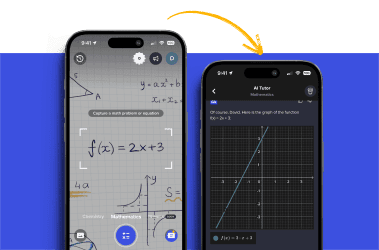


Take a picture of your assignment and use AI tutor.
- The Fundamental Counting Principle
- Permutations
- Variations in Combinatorics
- Combinations